

Why Poli-Lit Research Matters

Research on civic literacy has grown significantly in recent years. National studies show that many adults can correctly answer foundational questions about government, such as identifying the three branches of government or recognizing that freedom of speech is protected by the Constitution. All according to research from the University of Pennsylvania’s Annenberg Public Policy Center, a majority of Americans prove their knowledge of these basic, but essential civic concepts.
However, it is increasingly difficult to find research on an equally pressing issue just as important then that mentioned. Do people know WHO represents them at the local, state, and federal levels.
There is very little data examining whether individuals can identify their own elected officials, understand their roles, or know how those officials impact their communities. Questions such as “Who is your member of Congress?”, “Who represents you in your state legislature?”, or “Who serves as your mayor or city council member?” are rarely the primary focus of large civic studies.
Poli-Lit aims to help fill this gap. Our research focuses on political literacy (Poli-Lit) which is an umbrella term we use which extends to representation literacy and the ability to identify, understand, and access one’s elected representatives. By conducting campus, community, and statewide surveys, Poli-Lit seeks to better understand where gaps in representation literacy exist and how civic education efforts can be better targeted.
Our research is intended to inform educators, community leaders, and policymakers by providing clearer insight into how people engage with their local democratic institutions and where additional civic learning may be most effective.
Poli-Lit Research will help our team identify were representation literacy and confidence is lacking, so we can build and use innovative ways to combat it.
Be Apart the Research Process with a Donation
We have big goals, but research takes resources. Donations to Poli-Lit help support a thorough and timely research process as we work to better understand civic and representation literacy. Learn more and donate on our Poli-Lit Donation Page.
University Research
Universities often foster some of the most politically engaged youth in America. Conducting polls at universities and colleges allows us to gather meaningful data on how gaps in political literacy affect students and young voters.
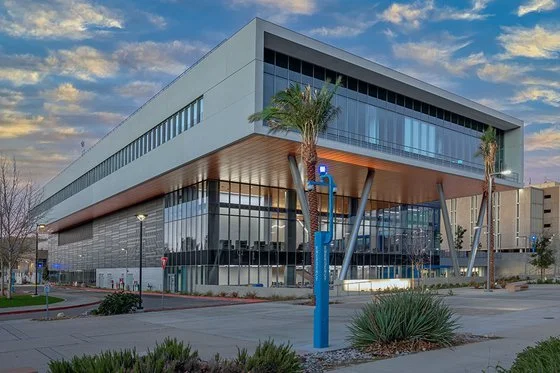
Poli-Lit will begin its very first university poll at California State University, San Bernardino. This initial research will help establish a baseline for understanding how well students know who represents them and how connected they feel to local, state, and federal government.
To learn more about our university research polls and student-led chapters, visit our University Chapters page.

Los Angeles County
One of Poli-Lit’s advantages is being based in Southern California, which provides access to one of the most populous counties in the United States: Los Angeles County, home to approximately 9.7 million residents. Los Angeles is also a major center of culture, media, and political history, with national influence across multiple industries and communities.
Conducting research in Los Angeles County allows Poli-Lit to study representation literacy within a large, diverse population. Research at this scale can provide valuable insight into how individuals understand who represents them and how confident they feel engaging with the political process at the local, state, and federal levels.
Studying representation literacy in Los Angeles helps Poli-Lit better understand patterns of civic awareness, engagement, and confidence in one of the country’s most influential regions.
The Inland Empire
Another one of Poli-Lit’s advantages is being rooted in the Inland Empire, a region that includes San Bernardino and Riverside counties and is home to over 4 million residents. The Inland Empire represents one of the fastest-growing regions in California and includes a mix of urban, suburban, and rural communities.
Conducting research in the Inland Empire allows Poli-Lit to examine representation literacy across a diverse and rapidly changing population. The region’s demographic variety and geographic scale make it well suited for studying how individuals understand who represents them and how they engage with local, state, and federal government.
Research in the Inland Empire provides valuable insight into civic awareness and representation literacy outside of major coastal metropolitan centers, helping Poli-Lit better understand how civic knowledge and engagement vary across different types of communities.

California Research
California provides a unique opportunity for large-scale civic research due to its size, diversity, and regional variation. With a population of nearly 40 million residents, California includes a wide range of communities, political contexts, and local governance structures across urban, suburban, and rural areas.
Conducting research at the statewide level allows Poli-Lit to examine representation literacy across multiple regions and demographic groups. California’s diversity makes it possible to study how individuals understand who represents them and how they engage with government across different local and regional contexts.
Statewide research in California helps Poli-Lit establish broader benchmarks for representation literacy while identifying regional patterns and differences in civic awareness. These findings can inform future research design and support a clearer understanding of civic education needs across the state.


National Research
National-level research allows Poli-Lit to examine representation literacy across the broader United States while accounting for regional, demographic, and structural differences in governance. The United States includes a wide range of political systems, community contexts, and civic education experiences, making national research both complex and essential.
Conducting research at the national level enables Poli-Lit to compare representation literacy across states and regions, helping to identify broader patterns in how individuals understand who represents them and how they engage with government. This approach allows for analysis of similarities and differences between local, state, and national contexts.
National research builds on Poli-Lit’s regional and statewide studies, using insights gained from earlier phases to inform a more comprehensive understanding of representation literacy nationwide. These findings can help establish a clearer picture of civic awareness across the country and support future research, education, and public understanding efforts.